
Product marketing that turns features into buyer value
Clear positioning, launch frameworks, and sales enablement that align product, marketing, and sales around what buyers actually care about.
When product marketing is weak, launches underperform
Product teams build features. Marketing runs campaigns. Sales pitches what they think resonates. But without a clear product marketing foundation, these efforts stay disconnected. Launches lack impact, competitive differentiation gets lost, and sales struggles to articulate value to technical buyers.
Common symptoms of weak product marketing:
- Product launches happen without clear messaging or sales enablement in place
- Sales can't explain how your product is different from competitors
- Marketing campaigns focus on features instead of buyer outcomes
- Cross-functional teams can't agree on target personas or key use cases
- New products get built without validated market positioning
Without strong product marketing, even great products struggle to gain traction because the market doesn’t understand their value.
Our approach connects product strategy to market execution
Rebound’s Product Marketing team bridges the gap between what your product does and what your market needs. We build positioning frameworks, launch plans, and sales enablement that give every team a shared understanding of who your customer is, what problems you solve, and why buyers should choose you.

Positioning that clarifies value
We define target buyers, use cases, and competitive differentiation for each product. This foundation ensures product, marketing, and sales operate from the same understanding of market fit and value proposition.

Launch frameworks that drive adoption
We build go-to-market plans, messaging hierarchies, and launch timelines that coordinate cross-functional efforts. Teams know what to build, when to launch, and how to measure success.

Enablement that accelerates sales
We create product one-pagers, competitive battlecards, demo scripts, and objection handling guides that give sales the confidence and clarity to close deals faster.
What’s included in our content marketing sprints
Rebound’s Product Marketing engagements typically run in focused two to four week sprints and deliver the strategic foundation and execution-ready assets your teams need to launch successfully and sell confidently.
STRATEGIC FOUNDATION
- Target buyer and persona definition
- Product positioning and value proposition
- Competitive analysis and differentiation framework
- Use case identification and prioritization
- Go-to-market strategy and launch planning
EXECUTION-READY ASSETS
- Product messaging and narrative structure
- Sales enablement playbooks and battlecards
- Product one-pagers and solution briefs
- Launch communication plans and timelines
- Demo scripts and objection handling guides
Product Marketing work in action
Our Product Marketing work creates integrated systems that connect product strategy to sales execution. From positioning frameworks to launch plans, sales battlecards, and product briefs, every piece reinforces clear value and competitive differentiation.

Rescue & recovery launch support
When a clinical study or product implementation is at risk, we help reposition, stabilize, and relaunch with clarity and confidence. From narrative reframing and stakeholder communications to updated value messaging and sales enablement, we ensure at-risk initiatives regain momentum and credibility in market.
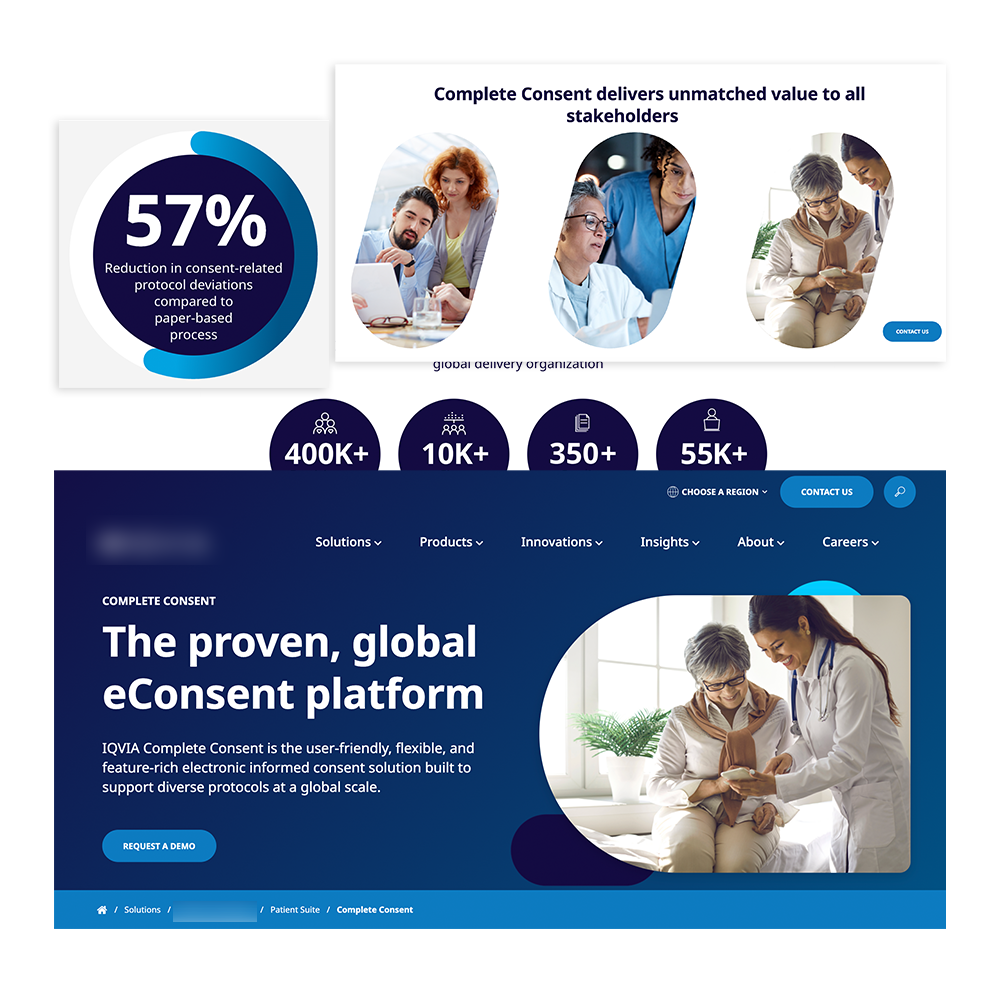
Digital informed consent positioning & launch
We translate complex eConsent technology into a clear, differentiated market story. From value proposition development and competitive positioning to sales enablement and launch assets, we help teams articulate how digital consent improves patient experience, site efficiency, and study compliance — driving adoption across sponsors and research sites.
CASE STUDY
Driving Pipeline through a coordinated multichannel product launch
Launching a new solution in life sciences demands disciplined GTM execution. Rebound developed the positioning, messaging, and multichannel activation strategy for a B2B SaaS product launch, aligning content, paid media, website, and sales enablement. The coordinated effort accelerated pipeline creation, unified messaging across stakeholders, and established a repeatable launch framework for future growth.

Product marketing is the right fit...
For emerging and growth-stage companies:
- You're launching your first product and need positioning, messaging, and sales enablement from scratch
- Your sales team can't clearly articulate what makes your product different from competitors
- Product launches happen without coordinated go-to-market plans or sales readiness
- You're entering a new market segment and need to reposition your product for different buyers
For established and enterprise organizations:
- New product launches underperform because cross-functional teams aren't aligned
- Sales needs updated battlecards, competitive positioning, or technical buyer messaging
- Your product roadmap is expanding faster than your ability to position and enable new capabilities
Let's build your product marketing foundation.
Start with a conversation about your product positioning challenges and how Rebound’s Product Marketing work can create the clarity and alignment your teams need.
Rebound’s Product Marketing engagements begin with a strategic assessment of your product portfolio, competitive landscape, and buyer needs. From there, we build a clear roadmap and move into focused sprints that deliver launch-ready assets and sales enablement within weeks.
Frequently Asked Questions
What is product marketing and why do B2B companies need it?
Product marketing is the discipline that translates product capability into market clarity.
It defines who the product is for, what problems it solves, how it differentiates, and how value should be communicated across sales, marketing, and customer conversations. It connects product strategy to commercial execution.
For B2B companies selling into life sciences and healthcare, product marketing is particularly critical. Buyers are technical, risk-sensitive, and often part of multi-stakeholder committees. Without structured positioning and enablement, even strong products struggle to gain traction.
In our model, product marketing is not a one-time messaging exercise. It is a coordinated system that aligns product, sales, and demand around a shared narrative that drives adoption.
What is the difference between product marketing and product management?
Product management focuses on defining what to build based on market needs, technical feasibility, and roadmap priorities.
Product marketing focuses on bringing that product to market effectively. It defines positioning, competitive differentiation, launch sequencing, sales enablement, and ongoing messaging refinement.
Product management answers, “What should we build?”
Product marketing answers, “How do we ensure the market understands and adopts it?”
In growing B2B organizations, confusion between these roles often creates launch friction. Our structured approach clarifies responsibilities and builds alignment across teams so strategy translates into commercial results.
How does product marketing support a new product or platform launch?
Effective launches begin long before announcement day.
Through our launch roadmap, we first clarify target buyers, core use cases, competitive differentiation, and messaging architecture. We then build coordinated launch plans that align marketing campaigns, sales enablement, and internal communication.
Because we have supported technology, data, and professional services companies in regulated markets, we understand the complexity of technical validation, stakeholder education, and long evaluation cycles. Launch plans are sequenced to build awareness, enable sales conversations, and support sustained adoption, not just initial visibility.
What should be included in a product launch plan?
A strong product launch plan includes:
- Target buyer and use case definition
- Positioning and messaging hierarchy
- Competitive differentiation framework
- Coordinated go-to-market timeline
- Sales enablement assets such as battlecards, one-pagers, and demo narratives
- Defined performance metrics aligned to adoption and pipeline
In our model, launch plans are structured around execution readiness. Messaging, enablement, demand activation, and measurement are aligned before launch. This prevents fragmented activity and reduces internal friction during high-stakes rollouts.
When should a company hire product marketing support?
Product marketing support is typically needed at moments of inflection.
For early and growth-stage companies, that may mean establishing foundational positioning before launching the first product. For more mature organizations, it often means improving underperforming launches, refreshing competitive differentiation, or aligning sales enablement to an expanding portfolio.
Because we work across maturity stages in regulated B2B markets, we right-size engagement. Some teams need foundational clarity. Others need structured launch orchestration. In both cases, the objective is the same: reduce internal confusion and accelerate adoption.